
Stories
The programme that refused to stay the same
What an evolving leadership journey taught us about the difference between delivering a design and responding to reality.
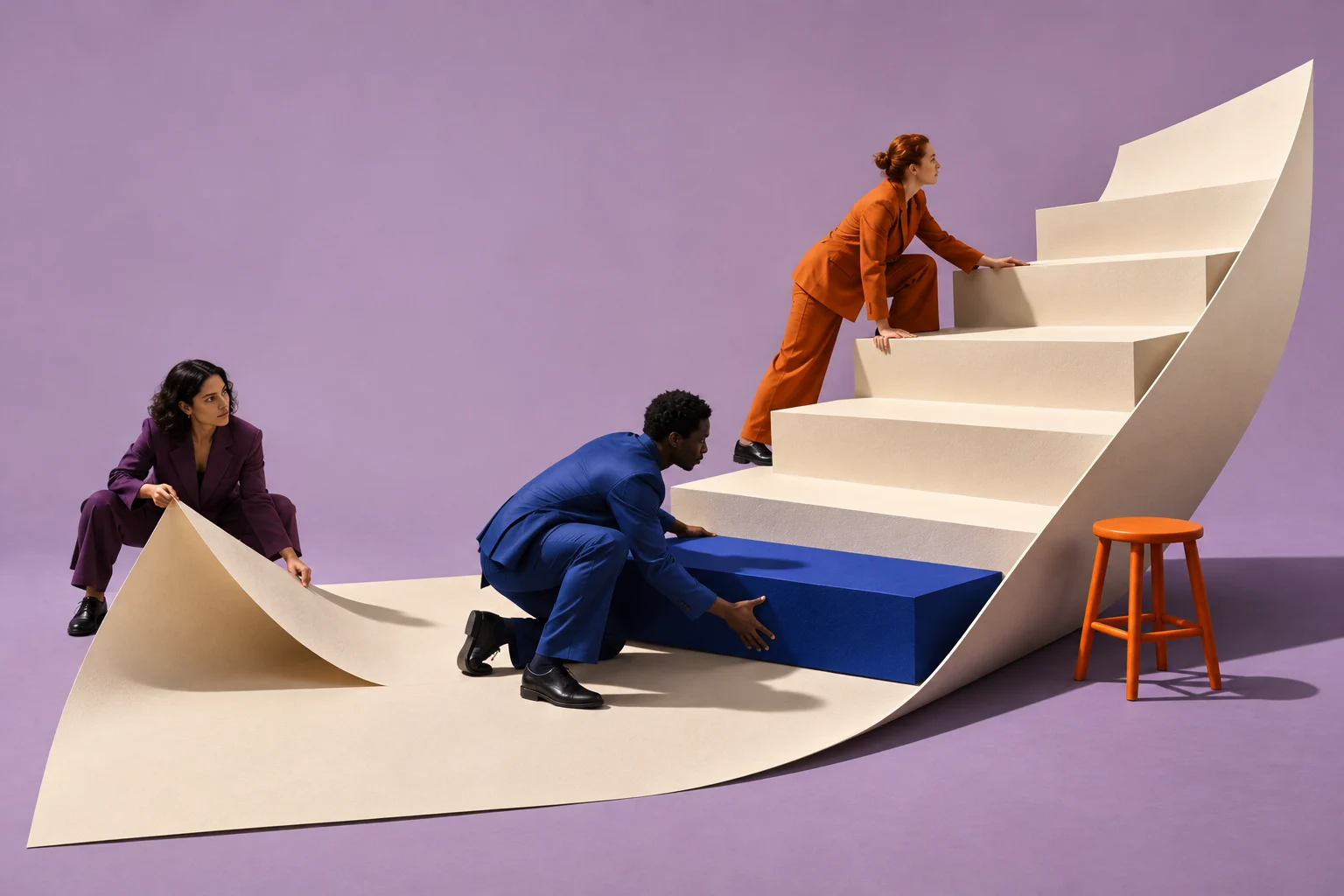
There is something reassuring about a well-designed leadership development programme. Objectives are clear, modules build on one another and facilitators know where they want to take participants. And then the participants arrive.
They bring experiences, relationships and organisational realities that challenge the original assumptions. If we expect leaders to remain curious and adapt, shouldn't we be willing to do the same?
The design was a starting hypothesis
In a leadership development journey we facilitated, the programme had a clear purpose and structure. Yet as it unfolded, we remained open to changing its design. Conversations revealed new challenges, some activities proved especially valuable and other elements needed reconsideration.
Rather than treating the original design as a script to execute unchanged, we treated it as a hypothesis about what would help people develop. That required listening, ongoing dialogue and the judgement to adjust the experience without losing sight of its purpose.
Quality was not simply delivering what had been planned. It was deciding thoughtfully what would be most valuable as our understanding developed.
The group became part of the architecture
Leaders bring a remarkable collection of experiences and perspectives into a room. Yet programmes sometimes treat them primarily as recipients of content.
Through dialogue, experiential exercises, reflection and peer learning, participants became resources for one another. Learning emerged from different interpretations of familiar situations, difficult questions and feedback about the impact of their behaviour.
Leadership happens in relationships. A programme that lets people experience their impact on others can reveal something a presentation never could.
Between modules, real life intervened
Participants returned to competing priorities, difficult conversations and familiar habits. Applying a new approach in those conditions often demanded more courage than discussing it in a workshop.
Reflection and peer conversations connected those experiences back to the journey. We also explored conversational AI as a way to offer additional rehearsal and reflection between facilitated sessions, and to gather richer qualitative feedback about learning application.
Promising technology does not automatically produce meaningful insight. The quality of the questions, the trust people place in the process and the care with which feedback is interpreted remain essential.
What changed for us?
We were not simply delivering a programme. We were participating in an evolving process of organisational learning. That required us to challenge our assumptions as carefully as we asked participants to challenge theirs.
A learning journey needs direction without rigidity, intention without closing off discovery. This is not improvisation without discipline. Meaningful adaptation depends on clear outcomes, careful observation and good judgement.
The lesson
We encourage leaders to embrace uncertainty, listen and adapt. Learning design should embody those same behaviours.
Perhaps the most useful programme is not one that unfolds exactly as planned. It is one that knows what it wants to achieve while remaining intelligent enough to learn along the way.